University Course “Culture and Health” 2025, Social Prescription: How doctors are using culture, sports, nature, and community service as medicine
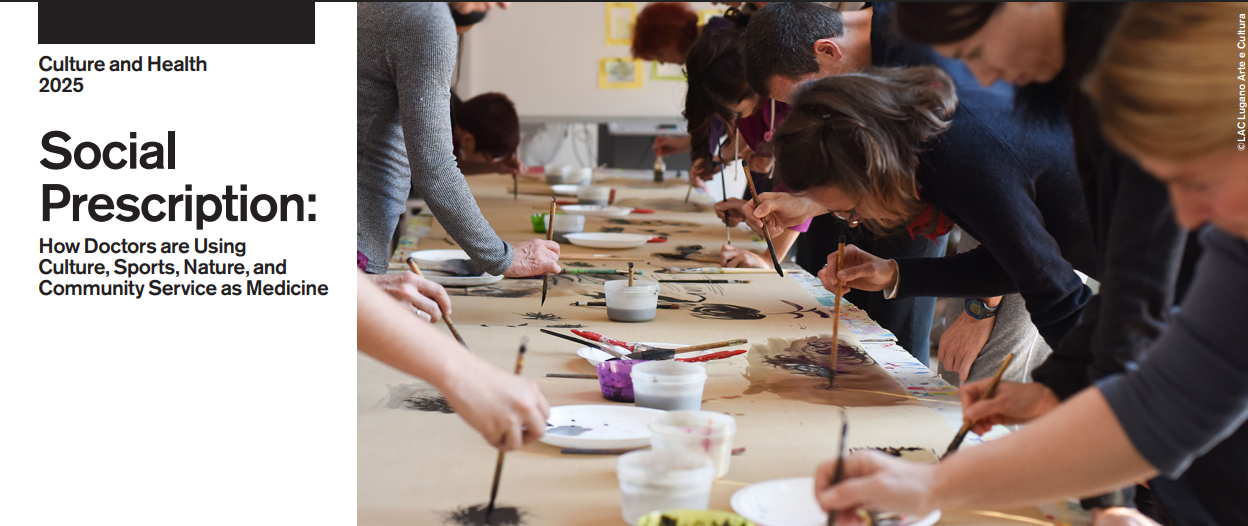
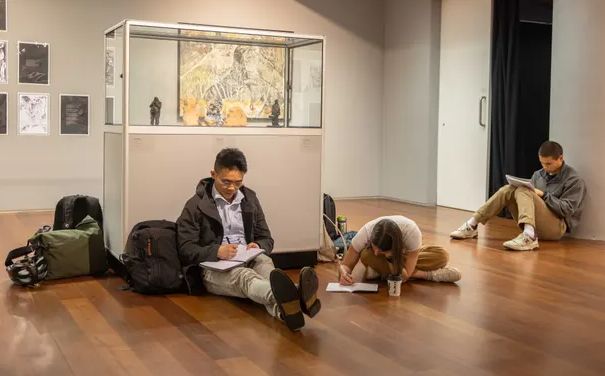
Screenshot 2025-10-19 150203The fifth iteration of the “Culture and Health” course, promoted by the Faculty of Biomedical Science at USI – Università della Svizzera italiana with IBSA Foundation for scientific research and the Culture Department of the City of Lugano, will see personalities from the world of science and culture come together on seven Mondays to discuss topics connected with “Social Prescribing” for personal health.

Open to the public, the themed lessons will be held from Monday 6 October to Monday 24 November in the Aula Polivalente at Campus Est in Lugano, from 6 to 7.45 p.m.  The meetings are aimed at students and postgraduate students from the Faculty of Biomedical Science of USI, as well as anyone else who is interested. Every lesson involves an introductory keynote speech that will present the topic on the basis of the most recent scientific literature. This introduction will be followed by a debate involving an expert in the role of discussant.
The programme was put together by the course scientific committee consisting of Enzo Grossi, Luigi Di Corato, Silvia Misiti and Julia Hotz.
Read more

#ENDOs Project: Collecting Stories from People with Endometriosis

logo-endoAround 190 million people worldwide suffer from endometriosis; in Italy, at least 3 million have been officially diagnosed.

If you have or suspect you have endometriosis, #ENDOs offers you the opportunity to share your story completely anonymously, becoming part of a large community of support and understanding.

What is #ENDOs?

#ENDOs is a project co-funded by the European Union, created to provide a safe space where people from Italy, France and Ireland can share their experience with endometriosis and build a welcoming and supportive community that values each unique story.

The collected narratives will contribute to the creation of an “Emotional Narrative Dictionary,” helping doctors and other professionals better understand endometriosis and improve communication with those who experience this condition

How does it work?

The DNMLab platform, developed by DNM – Digital Narrative Medicine, will guide you through writing your story in a few simple steps while ensuring compliance with EU privacy regulations. You can choose to respond to the proposed prompts or ignore them if you prefer, as well as freely share the aspects of your experience that matter most to you.

Read more

An Integrated Care Approach to Improve Well-Being in Breast Cancer Patients

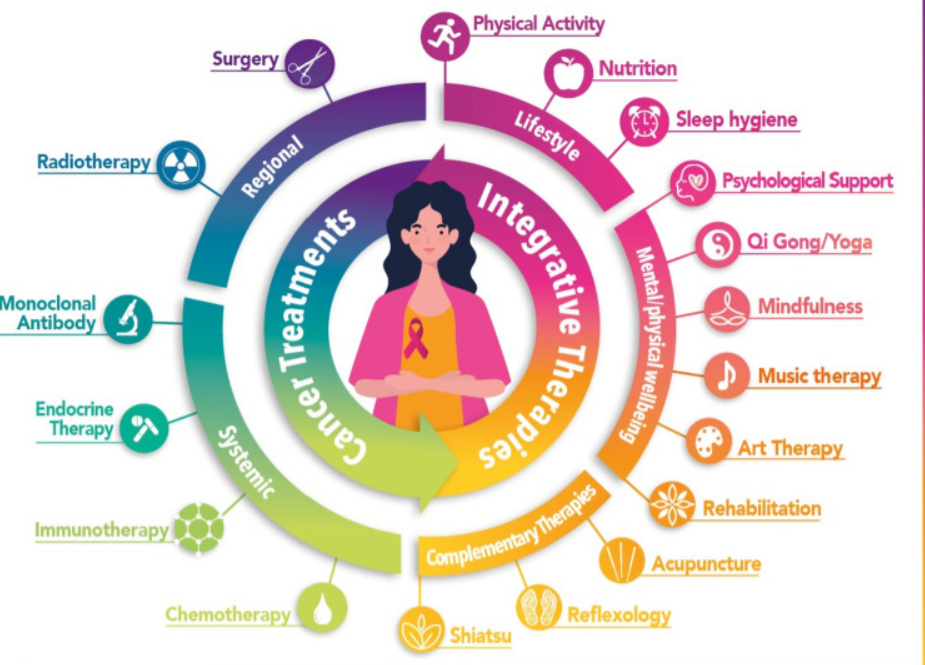
Screenshot 2025-04-18 122019A new Italian study proposes a holistic model to improve the quality of life for breast cancer patients

Breast cancer is the most common cancer worldwide and one of the leading causes of death among women. New approaches based on the adoption of so-called integrative therapies can be implemented to enhance the physical and psychological well-being of patients before, during, and after treatment. However, in Europe there are still few centers that apply these methods and acknowledge their importance.

Recently, an Italian study published in the scientific journal Current Oncology Reports brought together specialists from various fields with the aim of formulating a holistic and multidisciplinary approach to breast cancer care.

Read more

Narrative Medicine: theory, clinical practice and education – a scoping review

bmclogo6_An important article entitled “Narrative Medicine: theory, clinical practice and education – a scoping review” by Ilaria Palla, Giuseppe Turchetti and Stefania Polvani, who for years was president of SIMeN (Società Italiana di Medicina Narrativa), has recently been published in the BMC Health Services Research magazine.

The authors have mapped and analyzed all published studies related to theory, clinical practice and education in Narrative Medicine.

The paper, through a focus on Italy and the United States, or the countries in which MN is most developed, reveals the possibility of future projects in which to measure Narrative Medicine according to an approach that integrates training and clinical practice.

Read more

‘Pushed into humanity’: can learning about storytelling make better doctors?

narr gNarrative medicine encourages doctors to engage more deeply with patients by listening to their stories
The Melbourne general practitioner Mariam Tokhi knows exactly what her friend and colleague the senior paediatric emergency physician Fiona Reilly means when she speaks of her “back pocket full of ghosts”.
Reilly is talking about those haunting memories all medical doctors harbour about their interactions with patients who are sometimes labelled “difficult” or for whom things didn’t go as they should or could have. Some survived, perhaps even flourished. Others died. Read more

Narrative Medicine Writing Saved My Sanity

nmStorytelling saved my sanity during the coronavirus pandemic. The lockdown afforded me time to write and share stories about my life and career. I wasn’t writing my memoir as much as I was engaged in the practice of narrative medicine writing — stories about the meaning of illness and opportunities to reflect on the vastness and depth of human experience in the healthcare setting. After I began telling my stories, I discovered the field of narrative medicine has been around since the turn of the century. Read more

Tell Your Patient Story: Michael Vitez video interview

vitezBeing a patient makes you the lead character in your health journey. If you have a rare or serious condition, your story might have started decades ago or maybe you’re coping with a brand-new diagnosis. Either way, you have something to say about your lived experience.  That’s why we asked Pulitzer-Prize winning journalist Michael Vitez to record this short video that walks you through a seven-minute writing exercise. It’s a no-pressure way to see what happens when you put pen to paper or your fingers to the keyboard.

As a journalist, Vitez spent a lot of time at the bedside, writing about people who were seriously ill. He then went on to create the Narrative Medicine program at the Lewis Katz School of Medicine at Temple University in Philadelphia. Today, he helps doctors in training appreciate the human side of medicine and celebrate stories as an essential element in the doctor-patient relationship.

Read more

The mission of Erika Nelson

nelson-2bNarrative medicine, which encourages patients and families to share stories about their experience with illness or death, may seem like an unlikely path for someone whose career has focused mostly on German language and literature. Erika Nelson, associate professor of German Studies, came to the field from her own life experience: the loss of her late husband, Neil, in 2019, after a nine-year battle with cancer.

“Talking about death and dying teaches us what life is,” said Nelson, who also directs the Gender, Sexuality and Women’s Studies program. “Even with my husband’s passing, there were so many beautiful things. I had the great fortune to care for someone else and really fight for their life. And I learned so much about grief … as the world went into mourning for COVID, I was there too.”

Read more

Narrative medicine, narrative practice, and the creation of meaning

The-LancetMedical interest in the study of narratives, whether those of patients or doctors, goes back a long way. However, the field of narrative medicine emerged in the late 20th century and is associated in many people’s minds with two seminal texts. One was Narrative Based Medicine: Dialogue and Discourse in Clinical Practice, a collection of essays edited by two British academic general practitioners, Trisha Greenhalgh and Brian Hurwitz. The other was Narrative Medicine: Honoring the Stories of Illness by the US physician and literary scholar Rita Charon. In the years since then, the field has diversified considerably, but there is a consensus among its teachers and practitioners that narrative is central to medicine, requiring attunement to narratives told by patients and clinicians and competence in engaging with them. Read more

Narrative Medicine: A Digital Diary in the Management of Bone and Soft Tissue Sarcoma Patients. Preliminary Results of a Multidisciplinary Pilot Study

cercatoGuidelines for the implementation of narrative medicine in clinical practice exist; however, in Italy, no standard methodology is currently available for the management of oncological patients. Since 2017, at the “Regina Elena” National Cancer Institute, studies using “digital narrative diaries” (DNMLAB platform) have been carried out; this article focuses on a pilot, uncontrolled, real-life study aiming to evaluate the utility of DNM integrated with the care pathway of patients with bone and limb soft tissue sarcomas. Read more